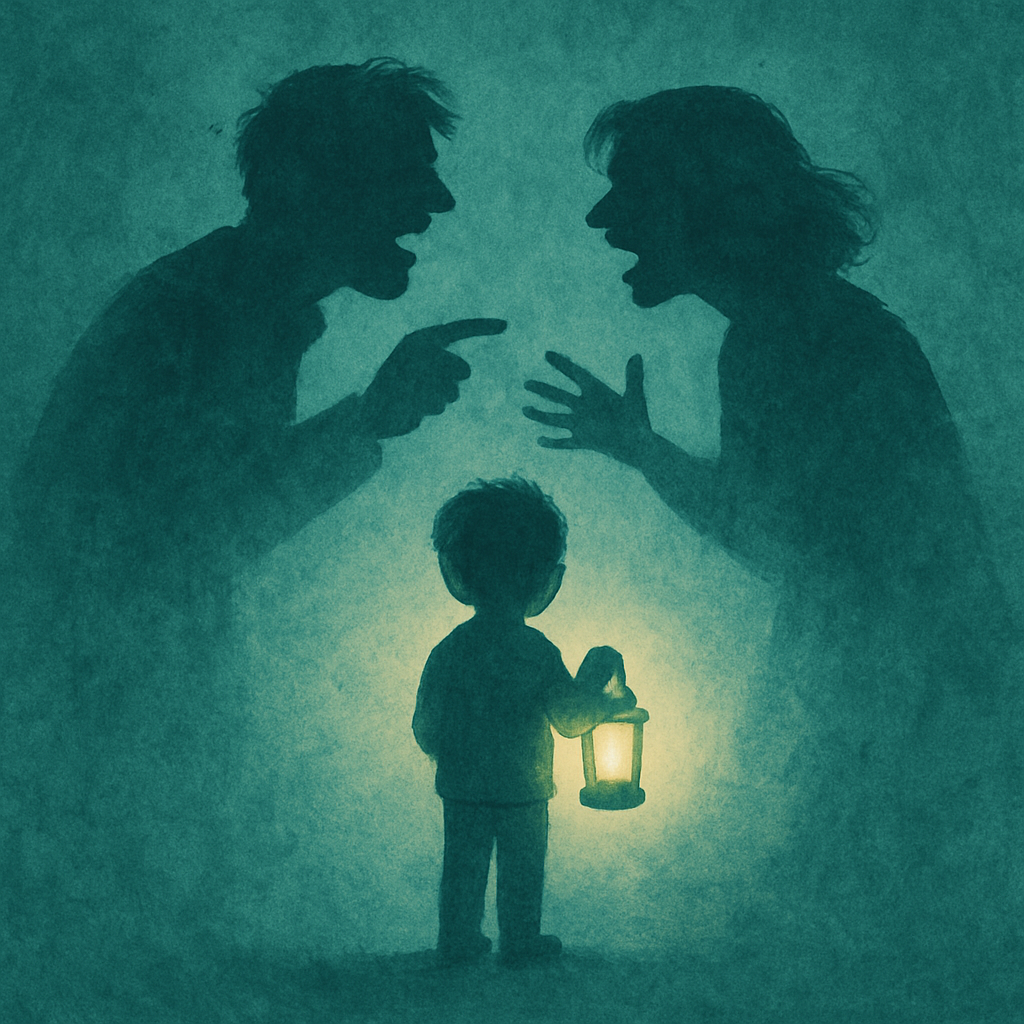
When respect flows only one way, it becomes obedience, not virtue.
On 孝, the absent concept of ‘respecting down,’ and the child who saw more clearly than the adults.
Every Saturday, my parents come to see me and my son for dinner. And recently, one small incident made me reflect again on the meaning of filial piety. We all know 孝 means respecting the elders. But when I checked online, something struck me — for thousands of years, the younger generation is taught to respect the older one.
But Confucius actually used the term 孝悌 (xiào tì):
- 孝 = respect for parents
- 悌 = respect for elder siblings / those slightly senior
So yes, the young must respect the older.
But what about the young? What about respect going downward?
There is no term, no word, no clear cultural expectation.
Before going further into that thought, I want to share my background — because it shapes how I see respect, both upwards and downwards.
I was born into a family where both my parents were what we locally call “banana”. Yellow on the outside, but culturally Western on the inside. They were part of the baby-boomer generation — you either studied fully Chinese or fully English, and both my parents fell into the English-school group. They were not highly educated; the university intake then was extremely limited. Both came out to work right after high school, met, married, and had me years later. I am their only child, and being a girl, they protected me in ways which, looking back now, were closer to suppression.
Growing up, my parents argued every two or three days. Loudly. Using very harsh language. They never suppressed their emotions. They were also extremely unsociable, with few friends, lacking the confidence and communication skills to maintain a social life. Naturally, I grew up the same way — awkward, unsure, avoiding social interactions because that was the environment I absorbed.
As I entered adulthood, started working, and eventually met my husband, I found myself avoiding long moments with my parents because the shadow of their constant arguing still clung to me. Their voices, their fights, their criticisms — especially my mother’s insecurity that made her think her daughter was never good enough — stayed inside me.
So on this particular Saturday when they came over, the moment they stepped into the house they expected my son to greet them respectfully as Grandpa and Grandma — which is normal for a child. They sat at the dinner table where we served our usual home-made style meal: luncheon meat with tortilla wraps, oven-grilled broccoli and cauliflower, and potato fries. As usual, my mom commented — my fries “not fully cooked” (they were, just not soft). When my son asked for more, she said not to give him too much because it’s “only carbohydrate”. I said it was fine — he is ADHD and burns energy like fire, unlike older people who don’t move as much.
Then my father excitedly mentioned a family gathering coming up with my relatives. I agreed happily. But my mother grew unhappy she wasn’t informed. She accused my father of hiding things from her. She didn’t agree with the restaurant choice. She feared my father would end up paying — she has always been very frugal to the point of being known as a scrooge. And suddenly, the whole dinner exploded. They began scolding each other, dragging each other’s character down, and then the four-letter words started flying.
I told them to stop. I told my father to go home instead of letting this escalate in front of my son. But they continued. My son — who is auditory sensitive — had already told them politely to stop, but they didn’t. So he quietly took his iPad and moved to a corner.
I told my parents firmly:
“Do not ever use that kind of language in my house. My husband and I do not fight in front of our son. Don’t bring this here.”
My mother said I wasn’t “siding her” simply because I agreed to let my cousin handle the gathering arrangements. She snapped: “Don’t tell me what to do.”
Later that night, I messaged my father:
“The boy is young now, and you all think you’re right in how you behave. But when he’s older and he walks out on you, is it him without manners — or is it the adults?”