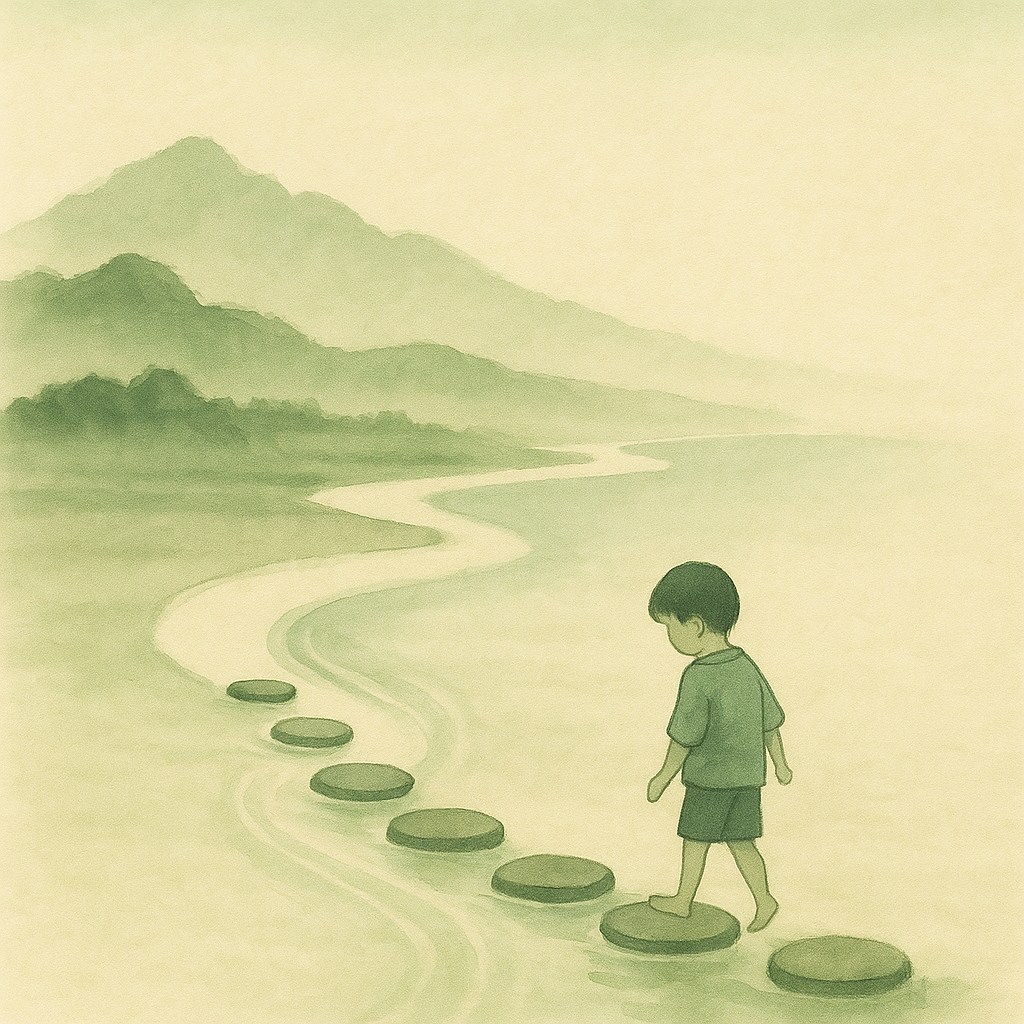
On Southeast Asian schooling, cultural expectations, and the observations that shaped my reflections.
I have a 7-year-old son who is ADHD, and I have been trying to manage family, motherhood, and my own small business all at the same time. Three years ago, in the middle of exhaustion and trial-and-error, I started writing down every intervention I tried with him — every method, every mistake, every approach that seemed to help even a little.
Those notes eventually became a book on Kindle. A self-published indie author with no readers, no reviews, and no buyers either. For a while, I thought my writing journey would end there. I thought my dream of sharing different approaches — the ones I had personally tested, the philosophy I shaped through an Asian parenting lens — would simply fade after the book was published.
But my desire to create a voice didn’t end. Neither did my observation, or my personal growth walking beside my son’s journey.
When he started Primary 1, everything changed.
I shifted from being a mother juggling survival to being a mother fully present in his school life. There were many sacrifices along the way, but his struggles were real. His reading level was closer to a 4- or 5-year-old; his handwriting was messy; his body was constantly moving. He was scolded almost daily in class, and his confidence dropped so low that he became even more hyperactive — as if noise could hide his frustration.
I realised no one else could see the brilliance in him.
Not the school system, not society, not the structure that rewards quiet, compliant children.
So I took matters into my own hands. I accepted the difficult path: juggling the slow trickle of my business, handling the family, squeezing what I could out of 24 hours, picking him up from school every day, cooking the most nourishing meals I could manage (because he burns through energy fast), and reteaching him everything from the foundations of a preschooler.
We weren’t afraid to admit we were starting from zero.
In fact, it became the best decision I ever made for him. Once the basics were rebuilt, the next steps became clearer — and easier.
Yet while spending so much time in his world, I started to see something else too.
Every day when I waited at the school gate, I found myself observing the people around me — other parents, teachers, children, and the small interactions that reveal who we are. Not judgmentally, but reflectively. As mirrors. I began to ask myself:
How can I be better?
How can I raise him with clarity instead of fear?
Because like any human, I have my weak moments. I lose patience. I grow tired. I feel unseen. And sometimes it feels as if no one understands what it means to mother a child who is “difficult” in a world that prefers easy children.
In these quiet moments of watching — the way a child hesitates before speaking, the frustration hidden in a parent’s sigh, the kindness of a teacher bending down to help a struggling student — I began to see a different side of parenting in Asian society. A Southeast Asian culture rarely spoken about, often misunderstood, and mostly invisible to the world.
I realised I didn’t want these reflections to stay in my head.
I didn’t want my writing to end with a book no one read.
I wanted to give these small observations a voice — not as universal truths, but as moments meant to evoke a feeling.
Somewhere between the school gate and the dinner table, I realised I wasn’t just surviving motherhood — I was documenting it.
This is why I write:
Because parenting is not a straight line.
Because raising a child with ADHD requires constant re-learning.
Because I needed a place to breathe, to think, to grow.
Because reflection is the only way I stay present.
And because somewhere in the quiet details, I began to recognise both of us — my child learning to be himself, and me learning to be his mother.
This space on Medium will be where I continue sharing these reflections — the quiet, imperfect, honest ones. Moments that don’t necessarily apply to every parent, but may resonate with someone who has stood in the same doorway, held the same worry, or loved a child through the same storm.
If you’re here, thank you for reading.
This is where my voice continues.